
The T.C.L.C - The Art of a Granny Hobby
We've recently done a podcast episode titled The Art of a Granny Hobby, but I felt that is needed an accompanying blog post too, especially as we move into the darker nights when people's mental health can take a dip. If you haven't listened to it already, you can now on Spotify or YouTube by clicking below!
A “granny hobby” sounds quaint until life starts to feel too loud, too fast, and too bright. Then knitting a row, stirring jam, writing a letter, or tending a pot of herbs begins to look less like nostalgia and more like medicine for the modern mind. A way to find reprieve in the fast pace we experience daily. A sustainable way to occupy the brain, instead of seeking the quick dopamine rush of notifications and screens.
These hobbies have never really gone away. They have just been pushed to the edge by these screens, speed, and the idea that every spare minute should produce something impressive, every moment should be productive. Given the current cost of living, it's even moved to every moments should make us money, which is understandable but not sustainable. Yet the quiet arts often associated with grandparents, mending, preserving, baking, gardening, crochet, embroidery, birdwatching, letter writing, and jigsaws, offer something many people are missing, rhythm, patience, touch, and a sense of season.
Granny hobbies and slow seasonal living for better mental health belong together because both ask for the same gentle shift. Pay attention to what is in front of you. Use your hands. Notice the weather. Make something small and useful. Let time move at a human pace, not a pace manufactured by technology. Don't get me wrong, as always, I think technology has it's place, that doesn't mean I wouldn't like the world to go back to letters for updates instead of statuses and people to create art instead of generate it but I think we can find a happy balance. But as part of everyday care and steps towards finding that sweet spot of balance, these old-fashioned pastimes can help create steadier days and offer comfort to the subconscious.
Many modern forms of rest are not very restful. Scrolling can feel like a break, but it often keeps the brain alert. Each swipe brings a new image, opinion, worry, true news story... fake news story, or comparison, and let's be honest, we all compare, it's human nature. In short, the body may be still, but the mind keeps jumping. A granny hobby works differently. It usually has a simple rhythm, an element of repetition and a tangible end product.
Knit one row. Shell peas, which is something I remember doing each summer on my Grandparent's farm. I'd sit on one of the stone steps in their garden, my Gran would appear with a big beige bowl, my Grandpa is his shorts and wellies with another bowl full of peas and I'd sit and shell them all for an hour or so... sneaking the odd taste of one or two that looked particularly sweet. Fold dough. Pull weeds. Thread a needle. Sand a piece of wood. Sort buttons. Write a few lines in a diary or journal.
The task is small enough to begin, but absorbing enough to hold attention, which is what makes them so rewarding. Repetitive, hands-on activities can support a state often described as flow, where focus narrows and the sense of time softens.
I also feel that we might have become numb, blind, or maybe the correct word is removed to the process of creation, some people seem to think food is grown on supermarket shelves, that all knitted jumpers were created by a machine. There is something vitally important in seeing the process that leads to something being. There is also comfort in visible progress. A scarf grows by a few centimetres. A jar fills with blackberry jam. A torn seam closes. A seedling appears. These changes are modest, but they give the brain evidence that effort still matters and allows us to form connections we might otherwise miss. That can feel especially grounding during anxious or low periods, when large goals may feel out of reach, granny hobby offers a manageable unit of care.
The best hobbies for mental steadiness are not necessarily beautiful or shareable. They are the ones that can be picked up often, without pressure.

Seasonal living is not about creating a picture-perfect cottage life, let's be real, if I'm having to remind you to take some time to fill your cup, you certainly don't have time to worry about your house being Instagram worthy. It is about letting the time of year guide small choices. Our grandparents and great-grandparents often lived this way because they had to. Food, light, clothing, and chores changed with the season and that rhythm can still support us now.
In spring, hobbies might centre on sowing seeds, pressing flowers, or walking to notice blossom, not to count your steps... In summer, there may be berry picking, salads from the garden, drying herbs, mending lighter clothes, or making cordial. Autumn invites preserving, bulb planting, soup making, quilting, and gathering leaves to bring the outside in. Winter suits knitting, candlelit reading, puzzling, slow cooking, and writing cards. The comfort and benefits you gain from flowing with the seasons are palpable.
When life is mostly digital, days can flatten. A Tuesday in February can feel strangely similar to a Saturday in July if both are spent under the same ceiling with the same phone. Seasonal hobbies put texture back into time. This alleviates feelings of depression, of anxiety, of loneliness... It might not be a substitute to professional help for deeper problems but it can certainly help everyone in the everyday.
They also help with anticipation. Looking forward to blackberry jam season, the first apple crumble (which if I'm honest creeps forward every year for me... Crumble is an elite food, and no one will change my mind on it), the return of sock knitting, or the annual sorting of seed packets gives the year gentle landmarks. These are not grand events, but they help the mind feel held by a wider pattern. Is it possible as a race, we've spent a little too long working against nature when we should be flowing with it. I truly believe that that is one of the first steps we can take to living a more sustainable lifestyle, one kinder on us and the world we live in.
Granny hobbies carry memory, even when the skill is new to us, it often feels old in the best way. Like I said before, when the peas are growing or the sewing machine comes out, I instantly feel connected to my Grandparents and Great Grandparents before them. Not everyone has warm family memories attached to grandparents, and not every tradition needs to be kept. My family is very small, so I understand that some people may actively avoid this connection to previous generations for whatever reasons, which trust me... I get, so even if they don't allow you to harbour a connection to previous people, feel the connection and comfort which comes with simpler times. If family traditions feel complicated, there is still freedom here. A person can choose which old skills to claim. They can learn a craft from a neighbour, a local workshop, a library book, or a community group.
A recipe card in fading ink or a button tin that once belonged to an aunt, my button box once again belonged to my Gran (now I come to write this, she's handed down a lot of things to me, she says because she knows I will cherish the connection but really, maybe she was just having a clear out!), or even a knitting pattern with pencilled notes in the margin. These ordinary things act like bridges, making granny hobbies so much more than just a social media trend, I said in the Podcast, maybe we should stop calling them granny hobbies and give them more of a deserved title, like Timeless Hobbies.
When someone darns a sock today, they are not just saving fabric from landfill, they are joining a long line of people who understood thrift, patience, and care. When someone learns to crochet from an online video, then teaches a child or friend, the chain continues in a modern form, finding the sweet spot of then and now. I did a workshop the other week and one of the children attending dug out a set of knitting needles and yarn, he was only about eight but this action sparked so many memories about staying with his Nan. He was getting a little frustrated as he couldn't remember how to do it, but he was shown and starting knitting to himself in a corner once the workshop had ended. It was a privilege to see!
These hobbies also make grief gentler for some people. Recreating a family recipe or using inherited tools can be a way to spend time with someone who is no longer here. The activity becomes a form of remembrance that does not require many words, if any. No communication which can feel so difficult in those moments. Grief takes time to accept, so you might not yet feel this, but in time it may come.
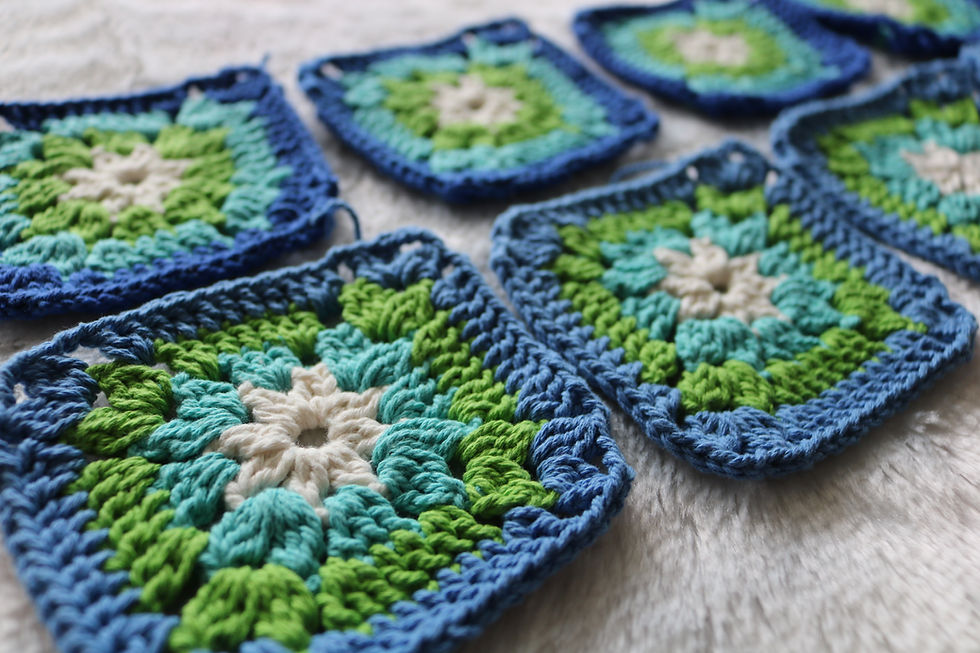
Another Brucey bonus of a granny or timeless hobby is that they can reduce screentime without making it feel like a battle. Trying to reduce screen time through willpower alone is hard. Phones are designed to be easy to pick up, that's part of the appeal. They've been created for ease, filling awkward gaps, tired evenings, and moments of loneliness. Simply saying “use it less” often leaves an empty space and can seem impossible. I patted myself on the back last week when my phone said I'd used it 55mins less than the previous week... there's 168 hours in a week...
Granny hobbies work because they replace the habit with something physical for example a half-done jigsaw on a side table invites a few quiet minutes... even if the jigsaw has been half done for two years because all the brown bits look the same! Not that that's personal experience or anything... A mending pile beside a radio can turn an evening into something calmer.
The key is to make the hobby more available than the phone.
That might mean:
Keeping a small project in a bag for train journeys
Leaving a puzzle or sketchbook where it can be seen
Putting wool, thread, or seed packets in a pleasing basket
Choosing hobbies that can be done in short bursts
Pairing a craft with an audiobook, radio programme, or quiet music
Charging the phone in another room for one hour in the evening
There is no need to reject technology completely. Many people learn traditional skills from videos, forums, and digital patterns. The healthier balance comes when screens become a tool rather than the main event.
The phrase “slow living” can sound expensive or unrealistic if it gets tied to spotless kitchens, linen aprons, and endless free time. Real slow seasonal living has to fit around work, care, tiredness, budgets, and small homes, so my advice is to start with something that asks very little.
A beginner does not need a cupboard full of craft supplies but if you're like me, that's exactly what will happen. A ball of wool and a hook can be enough, the aim is much more about creating something sustainable that can integrate in your everyday. With the nights drawing in, this is the perfect chance to find moments of time for a hands on hobby.
It can also help if you try choosing what to do by mood rather than by image or aesthetic.
For example, if the mind feels restless, choose something rhythmic, such as knitting, weeding, kneading dough, or sweeping leaves.
If life feels chaotic, choose something that restores order, such as mending, sorting a drawer, making stock, or labelling jars.
If the days feel dull, choose something sensory, such as baking with spice, arranging flowers, drying orange slices, or sketching birds.
If loneliness is present, choose something that can be shared, such as a craft circle, community garden, baking for a neighbour, or writing letters.
Small rituals help the habit take root. Ten minutes after breakfast. One row before bed. Sunday soup. A handwritten note on the first of the month. Seeds sown on a mild March weekend. These patterns gather meaning because they are repeated, quite often like something with the hobby itself, crochet and counting stitches for example.

If you're like me, a Capricorn with a tendency for perfectionism, old-fashioned hobbies can become stressful if they turn into another performance but it's important to remember that a wonky scarf still warms, a patched hem still holds, a cake that sinks in the middle can still be eaten with custard (and taste pretty damn good), and a garden with weeds can still feed bees. Perfection is rarely the point and apart from anything in many ways, the visible mistake is what makes the object human. It shows a hand at work that was learning and it shows presence.
That matters for mental health because so much of modern life rewards polish, people will often choose something made by machines because they all match over something full of character and still fit for purpose. Handmade hobbies offer relief from that pressure as they allow a person to be a beginner, to repeat a simple task, and to enjoy an outcome even when it is uneven. As adults, it can be hard to feel like a beginner again, the world often demands we know what we're doing so to remind ourselves this doesn't always have to be the case is invaluable.
Granny hobbies are not a cure for the pressures of modern life, but they can soften the edges. They bring the mind back to the hands as they create distance from screens. They restore contact with seasons, materials, food, weather, and memory.
So maybe this next month, pick up a new or rather, old, timeless hobby, let it be slow, let it be ordinary, let it bring the day back within reach.

#slowliving #grannyhobby #wellbeing #hobby #smallbusiness #farm #seasonal #seasonalliving #consideredliving


Comments